

Each of Anthony’s bronze sculptures is meticulously created by hand through the traditional lost-wax casting method. He is personally involved in every stage of the process and works closely with a team of highly skilled foundry artisans to ensure each piece meets his exacting standards.
The Sculpting and Casting Process
Inspiration
Drawing inspiration from extensive observation of wildlife in their natural environments, Anthony travels the globe with his camera and sketchbook. The images and impressions he gathers become the foundation for the sculptures he later develops in his studio.

Sculpting
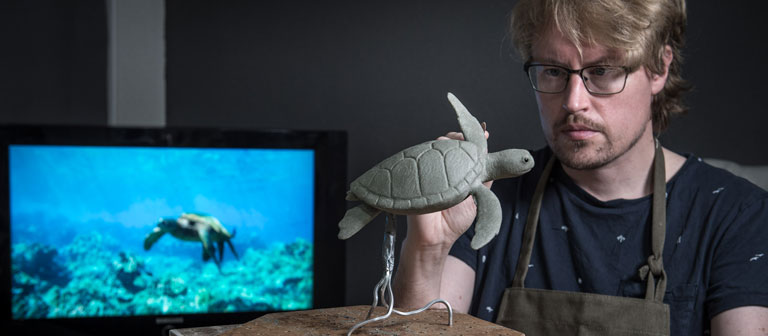
Once the initial designs are developed through sketches and small-scale maquettes, Anthony begins constructing an armature — the metal skeleton that supports the clay. He then meticulously refines the sculpture over several months, ensuring every detail achieves his desired level of precision and expression.
Moulding
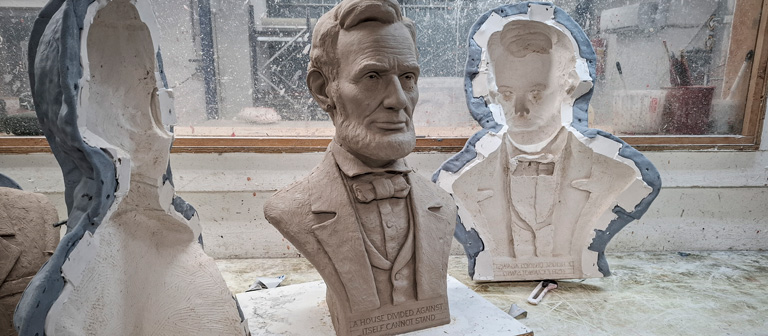
When the clay model is finished, a layer of silicone rubber is applied to record even the most delicate surface details. A rigid outer shell is then added to support the mold and ensure the exact form of the original sculpture is maintained.

Wax
A layer of liquid wax is applied inside the rubber mould and allowed to set, producing a hollow wax version that perfectly replicates the original clay sculpture. The wax is built up to a thickness of 4–5mm, with all seams meticulously finished before the addition of wax sprues, which facilitate the bronze pour and venting of gases. A new wax must be made for every casting in the edition.
Investment
To create the mold for casting, the wax model is encased in a fine, fireproof ceramic or plaster investment, which records an exact negative of the sculpture’s form. When the mold is heated, the wax melts and drains away — the origin of the term lost wax process — leaving a cavity into which molten bronze is poured.


Pouring
At a temperature of around 1070 degrees centigrade, the molten bronze is poured into the pre-heated ceramic or plaster mold. After cooling and solidifying, the investment is chipped away, uncovering the cast bronze form for the first time.
Metalwork
After the cast bronze is removed from its shell, it undergoes cleaning and assembly, with any individual pieces welded and the joins seamlessly reworked. The detailed finishing of the surface, carried out using files and grinders, is referred to as chasing.


Patination
The final stage is the patination — the colouring of the bronze — and it is often the most exhilarating part of the entire process. By applying various chemicals to the heated surface, an almost limitless range of colours and tones can be achieved. Anthony is renowned for his imaginative and distinctive use of patinas, creating finishes that are both unique and visually striking.
Complete
Once the patination is complete, the sculpture is sealed with a layer of clear wax, protecting the surface finish for many years. With this final step, the bronze is complete and ready to be cherished, bringing beauty and enjoyment to its new home.
